
May 8, 2026
Agency Village, South Dakota – The Coalition of Large Tribes (COLT)—an intertribal organization representing the interests of the more than 50 tribes with reservations of 100,000 acres or more, encompassing more than 95% of the Indian Country lands and more than half the Native American population—was heartened to see important sovereignty language in today’s press release and decision from the Bureau of Land Management rescinding grazing permits for seven allotments in Phillips County, Montana, held by American Prairie, following a remand from the Secretary of the Interior directing the bureau to reevaluate permits issued in 2022.
BLM’s press release explains:
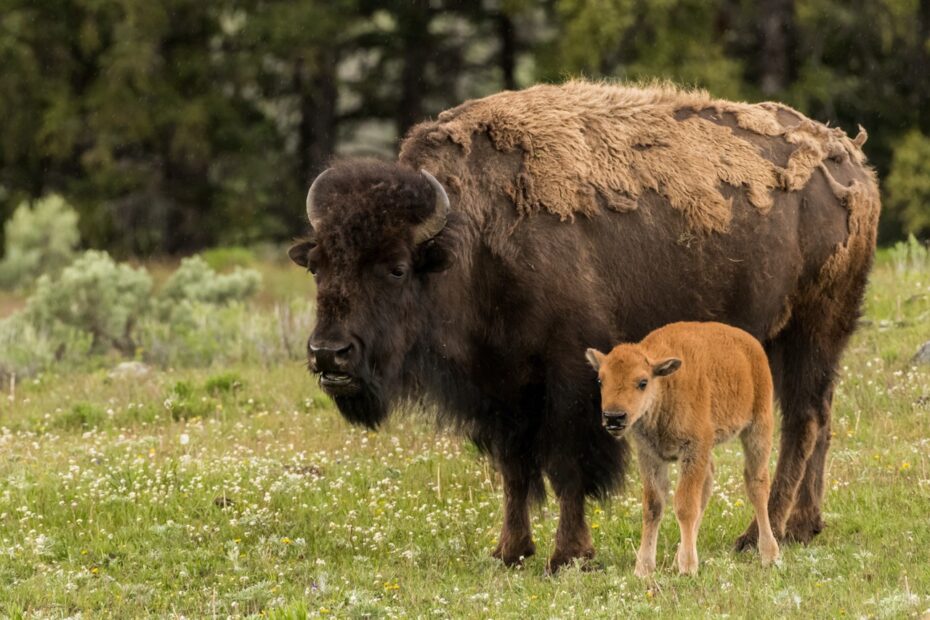
To be clear, the BLM is not evicting hundreds of bison from Montana. The BLM is simply rescinding grazing authority for American Prairie’s bison under these permits and does not preclude American Prairie’s herd from occupying their private land. The Department of the Interior continues to support bison conservation and management efforts across federally managed lands, in partnership with tribes and state governments, regardless of the status of any individual grazing permit. Yellowstone National Park maintains the nation’s only continuously wild bison herd, and the longstanding Interagency Bison Management Plan continues to guide conservation, migration management and disease prevention in coordination with the State of Montana, tribal nations and federal agencies. Tribal conservation programs, including the Fort Peck Assiniboine and Sioux Tribes’ quarantine and restoration efforts and the Confederated Salish and Kootenai Tribes’ management of the National Bison Range, also remain active and ongoing. The BLM continues to permit 8,831 bison as domestic livestock on federally managed grazing allotments.
BLM’s narrow framing is welcome, but not part of the decision or the administrative record. The final decision includes an Appendix which, at pages 14-16, addresses COLT’s protest submission, and other tribal protests:
The BLM received a number of letters from tribal governments and tribal organizations expressing concerns regarding the impacts this decision might have on treaty rights, trust responsibilities, and principles of tribal sovereignty. The protests emphasize that bison are treaty-protected resources and that tribes retain rights to hunt and manage bison on traditional lands unless Congress explicitly revokes those rights. The protests also expressed concerns that this decision could exclude tribal bison herds from grazing leases which in turn could impact tribal bison herd expansion, partnerships, food sovereignty, and cultural restoration. Protesters suggest that consultation should have occurred due to the alleged potential for direct impacts to more than 70 tribal nations.
The BLM takes its treaty, trust, and consultation obligations seriously and appreciates the information submitted by tribes and tribal organizations in in their letters. This decision, however, is specific to this particular non-tribal permittee and the particular allotments for which that permittee holds grazing permits. The BLM does not typically consult with tribal nations on individual grazing permitting decisions, as they are specific to individual allotments and individual permittees. Here, the BLM is not adjudicating grazing rights of any tribal governments or representatives, nor does it appear that the decision would directly affect any of the tribal representatives. Nothing in the decision is intended to limit or eliminate existing treaty rights for hunting and managing bison. Moreover, the BLM is in the process of initiating rulemaking on its grazing regulations and will engage with tribes at that time and encourage and welcome feedback on these and any other topics of interest.
“COLT appreciates that BLM heard our arguments, especially our Treaty arguments, has taken them seriously, and expressly recognized that they persist irrespective of any individual non-tribal permittee lease decision,” said COLT Chairman J Garret Renville, Sisseton Wahpeton Oyate Chairman. “We welcome the forthcoming opportunities to engage with the BLM in their grazing rulemaking efforts.”
“COLT understands that Secretary Burgum and BLM do not intend any harm to tribal herds or management practices. To the contrary, we know the Department strongly supports bison restoration efforts and that hasn’t and won’t change,” Chairman Renville said. “While we are heartened by BLM’s protective language on tribal interests, COLT remains concerned about the potential negative precedential consequences of BLM’s final decision, which we believe is simply wrong on the law.”
“It remains that the Taylor Grazing Act is not suddenly ambiguous almost 100 years in,” said COLT Executive Director OJ Semans, Sr. “Today’s final decision does not change a word of BLM’s faulty proposed decision, and regrettably doubles-down on ‘DEI for cows,’ favoring less-efficient grazing animals on our public lands. This results-oriented decision is really about preserving cheap grazing opportunities for cattle ranchers, who are currently enjoying record prices for beef. And it remains a danger—today’s good language on tribal interests notwithstanding—that this decision could be used to prevent tribal bison herds grazing on federal lands in the future by creating a completely unjustifiable preference for cattle. That would be a calamity.”
“In COLT’s view, the Secretary always has discretion to make choices about what is right for particular public lands,” Semans said. “There is no need to engage in dictionary gymnastics to invent definitions for a century-old statute in a one-off decision in Phillips County, Montana. The BLM should reconsider that folly.”
There remains much work to be done on grazing policy, which will be a continuing focus for COLT. “We are willing to roll up our sleeves and work with Secretary Burgum and Acting BLM Director Groffy to achieve the highest and best for our bison relatives in the future.”
CONTACT:
COLT Chairman J. Garret Renville – (605) 268-0589, chairman@swo-nsn.gov
COLT Executive Director OJ Semans – (605) 828-1422, tateota@hotmail.com
Press Release PDF: